How ERISA Affects Your Right to Sue Your Health Insurer
ERISA is the federal law that governs most employer health plans, and it significantly limits your legal options when a claim is denied. Here is what you can and cannot do.
If your employer provides your health insurance, a federal law called ERISA probably governs your plan. ERISA was written to protect employee benefits, but it also narrows the remedies people expect from state court insurance disputes.
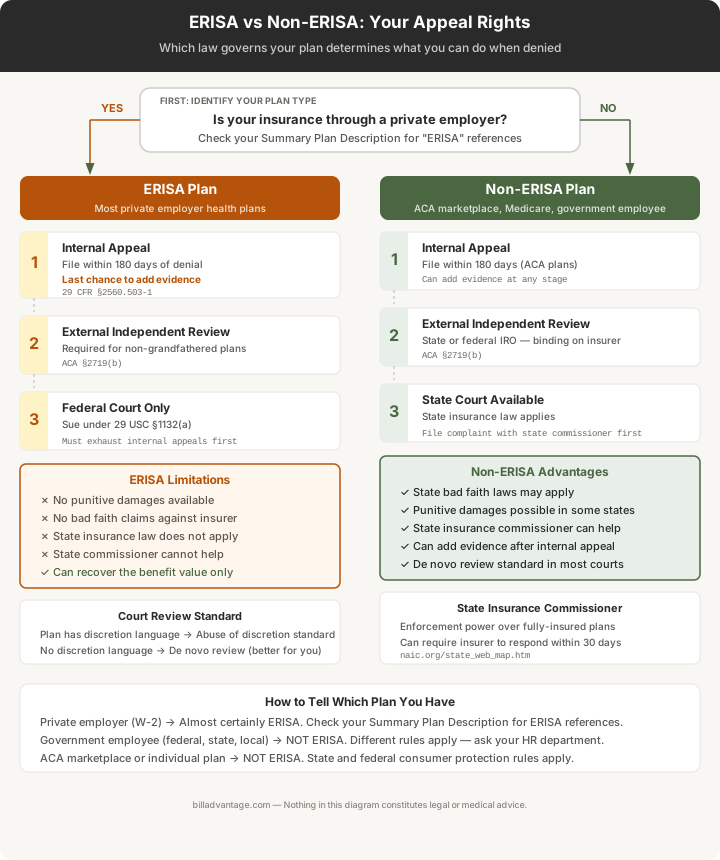
What ERISA preempts
ERISA preempts many state laws that "relate to" covered employee benefit plans. Practical effects often include:
- You usually cannot sue the insurer in state court for common-law bad faith on an ERISA-covered health plan
- State consumer protection statutes may not apply the same way they apply to individual policies
- State insurance commissioners often have limited authority over self-funded ERISA plans
- Punitive damages are generally not available under ERISA benefit claims in the way some state tort theories allow
What ERISA does allow
Under 29 USC 1132(a), participants can sue in federal court to recover benefits due, enforce plan terms, or clarify future benefit rights. The core remedy is usually the benefit amount at issue, not consequential damages for emotional distress or similar theories that sometimes exist in state tort cases.
The administrative record rule
Federal courts reviewing ERISA benefit denials usually limit review to the administrative record, meaning what was in the claim file during the plan's internal appeals. Evidence you never submitted during the appeal may be excluded later.
That makes the internal appeal your real evidentiary hearing in many cases:
- Address every denial reason in writing
- Submit treating records, specialist letters, and relevant guidelines during the appeal window
- Request the full claim file before you finalize the appeal
Exhaustion of administrative remedies
You must usually complete the plan's internal appeals before suing, unless the plan violated procedural duties in a way that excuses exhaustion under federal case law. Missing internal steps can get a lawsuit dismissed.
The Employee Benefits Security Administration handles complaints about ERISA-governed employer health plans.
For private employer health plans only. Not for ACA marketplace, Medicare, or Medicaid plans.
Abuse of discretion review
Many plans grant the administrator discretion to interpret the plan. When that language is valid and applies, courts often review denials for abuse of discretion, which is deferential. When discretion is not granted, some courts review de novo, which is more favorable to claimants.
What this means for your appeal
Treat the internal appeal like you are building a court record:
- Quote the denial reasons and respond point by point
- Submit complete medical evidence during the appeal, not after
- Keep a dated contact log with names and summaries
Ready to take action?
Employer Health Plan Dispute Guide maps ERISA timelines and record-building for employer denials.
Denial Letter Translator decodes the denial codes and language your appeal must answer.
Bill Advantage is a document literacy tool. Nothing in this article constitutes legal or medical advice.
Guides and tools on Bill Advantage
Explore tools, glossary entries, and denial code pages that match this topic.
More Insurance Appeals guides
Aetna publishes the clinical criteria it uses to approve or deny claims. Here is how to find the relevant bulletin and use it in your appeal.
Read articleAnthem Blue Cross Denials: Why Your State Matters More Than You ThinkAnthem operates as independent Blue Cross Blue Shield plans by state. Your denial rights and appeal process depend on which state plan you have.
Read articleCO-15 Prior Authorization Denial: What to Do When Your Provider Did Not Get ApprovalCO-15 means prior authorization was missing or invalid. You may not owe this bill. Here is how to determine responsibility and appeal.
Read article