How to Appeal a Short-Term Disability Denial
Short-term disability denials are governed by strict ERISA rules, including a 180-day appeal deadline and a critical rule that makes the appeal your last chance to add evidence. Here is what you need to know.
A short-term disability denial from your employer plan can be overturned, but only if you understand the rules. Most employer-sponsored STD plans are governed by ERISA, a federal law with strict timelines and a rule many people learn too late: the appeal is your last chance to add evidence to your case.
Determine what law governs your claim
Three frameworks commonly apply:
- ERISA, which governs most employer-sponsored group STD plans through private employers
- State SDI programs, including California, New York, New Jersey, Rhode Island, Hawaii, and Washington, each with separate processes
- Individual private disability policies, which are generally governed by state insurance law
Government employer plans are generally not ERISA-governed.
To confirm which framework applies, check your Summary Plan Description and ask HR for the governing plan documents.
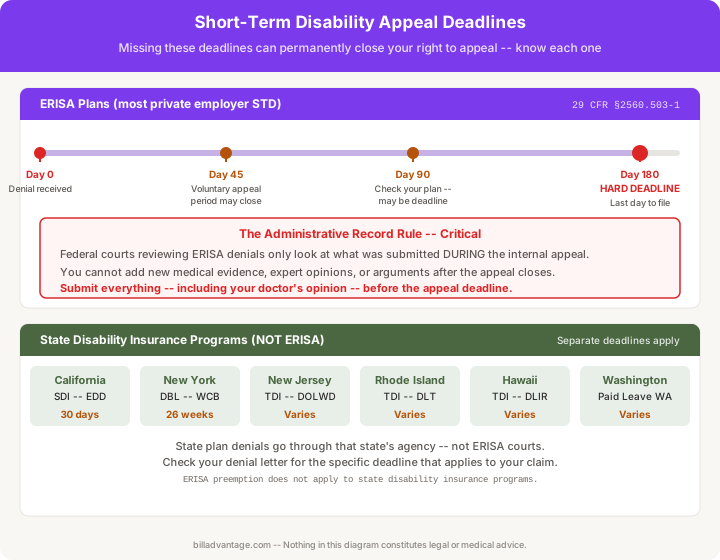
The 180-day ERISA deadline
For ERISA plans, you typically have 180 days from the denial letter date to file your appeal. This is a strict deadline. Missing it often means losing the right to sue in federal court.
Calendar this date immediately before doing anything else. ERISA also sets timing rules for claim decisions, including a 45-day initial decision window with possible extension when proper notice is provided.
The appeal record rule: the most important thing to understand
In ERISA cases, courts reviewing denied claims usually focus on the administrative record, meaning the materials submitted during the appeal process.
That means:
- The appeal is not a formality
- New evidence is often difficult or impossible to introduce later
- Your appeal package needs to be complete the first time
Treat the appeal as your full evidentiary case file.
What to include in a strong appeal
A strong appeal is organized and addresses each denial reason directly.
- Request your complete claim file immediately
- Include treating physician statements that address the exact denial rationale
- Include complete medical records for the disability period
- Add functional capacity evaluations if work limitations are central
- Add specialist opinions not included in the original claim
- Address every denial point in writing, one by one
The LTD connection
Some long-term disability plans require a successful STD claim first. If you also have LTD coverage, review LTD terms right after an STD denial. An unresolved STD denial can affect LTD eligibility later.
State SDI programs: different rules
State SDI programs can have much shorter deadlines than ERISA.
Examples:
- CA EDD SDI: appeal within 30 days using DE 1000A
- NJ TDI: 7 days to employer or insurer, then 7 days to NJ DOL after insurer denial
- RI TDI: 10 days to RI DOL
- HI TDI: 10 days to Hawaii DOL
- WA PFML: 90 days to WA ESD
- NY DBL: follow insurer internal process
Always confirm current deadlines for your exact plan and jurisdiction.
211 connects people to local social services including emergency financial assistance, utility help, food programs, healthcare navigation, and insurance enrollment support. Free, confidential, available 24 hours a day.
Text your ZIP code to 898211 for two-way text support. Available in all 50 states, DC, and Puerto Rico (99% population coverage). Operated by United Way Worldwide. Free and confidential.
Ready to take action?
Short-Term Disability Appeal Guide can help you understand your denial and build a complete appeal plan.
Bill Advantage is a document literacy tool. Nothing in this article constitutes legal or medical advice.
Guides and tools on Bill Advantage
Explore tools, glossary entries, and denial code pages that match this topic.
More Insurance Appeals guides
Aetna publishes the clinical criteria it uses to approve or deny claims. Here is how to find the relevant bulletin and use it in your appeal.
Read articleAnthem Blue Cross Denials: Why Your State Matters More Than You ThinkAnthem operates as independent Blue Cross Blue Shield plans by state. Your denial rights and appeal process depend on which state plan you have.
Read articleCO-15 Prior Authorization Denial: What to Do When Your Provider Did Not Get ApprovalCO-15 means prior authorization was missing or invalid. You may not owe this bill. Here is how to determine responsibility and appeal.
Read article