How to Dispute a Medical Bill: A Step-by-Step Guide
Up to 80% of medical bills may contain errors. Here is exactly how to dispute a medical bill and get charges reduced or removed.
Medical bills are confusing on purpose. Hospitals and insurers use codes, abbreviations, and formatting that make it nearly impossible for a patient to verify whether they are being charged correctly. According to industry billing advocates, up to 80% of medical bills may contain errors.
The good news: you have the right to dispute any charge you believe is incorrect. You do not need a lawyer. You do not need to pay first. You just need to know the process.
Step 1: Request an Itemized Bill
Before you dispute anything, you need to see exactly what you are being charged for. Call the billing department and ask for an itemized bill. This lists every charge by procedure code (CPT code), the date of service, and the amount billed.
An itemized bill is your right. Providers are required to give you one when you ask. If they resist, note the date and name of the person you spoke with and follow up in writing.
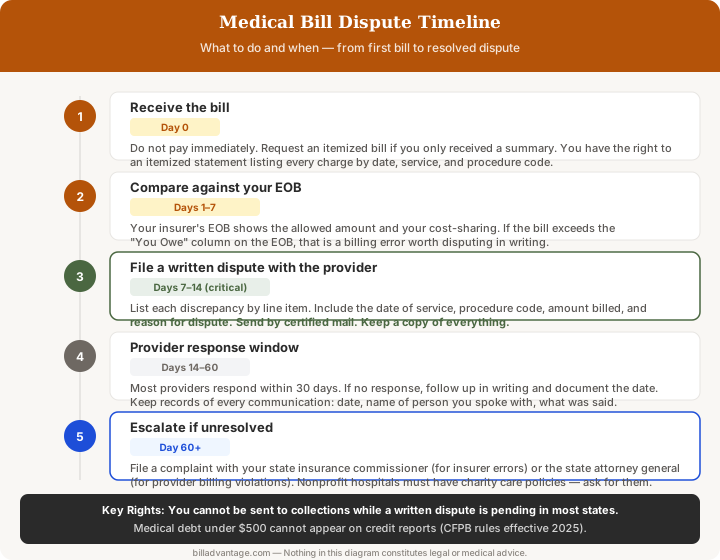
Step 2: Review Your Explanation of Benefits
Your insurer sends an Explanation of Benefits (EOB) after processing a claim. Compare the EOB to your itemized bill. Look for:
- Charges that appear on your bill but not on the EOB
- Amounts that differ between the two documents
- Services billed that you do not remember receiving
- Duplicate charges for the same service
Step 3: Identify the Error
Common medical billing errors include:
- Upcoding: billing for a more expensive service than what was performed. A routine office visit billed as a complex consultation.
- Duplicate billing: the same service billed twice.
- Unbundling: charging separately for procedures that should be billed together at a lower combined rate.
- Balance billing: charging you the difference between what the provider charges and what your insurance pays, when the provider is in-network.
- Services not rendered: charges for services you did not receive.
Step 4: Send a Dispute Letter
Once you have identified the error, put your dispute in writing. Your letter should include:
- Your name, date of birth, and account number
- The specific charge you are disputing and why
- The correct amount you believe you owe (if any)
- A request for written confirmation of the resolution
- A deadline for response (30 days is standard)
Send the letter by certified mail to the billing department and keep a copy. If the dispute involves your insurer, send a separate letter to your insurer's appeals department.
Step 5: Follow Up
If you do not receive a response within 30 days, follow up by phone and reference your letter date. Note every conversation: date, time, name of the person you spoke with, and what they said.
If the dispute is denied, you have the right to appeal. Ask for the denial in writing and request the specific reason. Most billing disputes are resolved before reaching a formal appeal.
211 connects people to local social services including emergency financial assistance, utility help, food programs, healthcare navigation, and insurance enrollment support. Free, confidential, available 24 hours a day.
Text your ZIP code to 898211 for two-way text support. Available in all 50 states, DC, and Puerto Rico (99% population coverage). Operated by United Way Worldwide. Free and confidential.
Bill Advantage is a document literacy tool. Nothing on this platform constitutes legal or medical advice.
Guides and tools on Bill Advantage
Explore tools, glossary entries, and denial code pages that match this topic.
More Medical Billing guides
Deductible, copay, and coinsurance are three different cost-sharing mechanisms. Understanding how they interact tells you exactly what you will owe before you get care.
Read articleHealthcare Sharing Ministries: What They Are and What Rights You HaveHealthcare sharing ministries are not insurance and are not regulated like insurance. Here is what members actually receive and what recourse exists when a bill is not paid.
Read articleHow to Appeal a Hospital Financial Assistance DenialNonprofit hospitals are required to have financial assistance programs. If your application was denied, you have the right to appeal. Here is how to do it effectively.
Read article