HSA vs FSA vs HRA: Which One You Have and What It Means
Health Savings Accounts, Flexible Spending Accounts, and Health Reimbursement Arrangements all help pay for medical expenses, but they work completely differently. Here is how to tell which one you have and what you can actually do with it.
If your benefits include an account for medical expenses, you probably have an HSA, an FSA, or an HRA. They sound similar, but ownership, rollover rules, and job changes work very differently.
How to tell which one you have
HSA (Health Savings Account): You can only contribute if you are enrolled in a qualifying high-deductible health plan and meet other IRS eligibility rules. The account is yours and travels with you when you change jobs.
FSA (Flexible Spending Account): Your employer sponsors it. You elect an annual amount at enrollment. It is not tied to HDHP rules the same way an HSA is. Unused balances are generally forfeited at year-end unless your plan allows a limited rollover or grace period.
HRA (Health Reimbursement Arrangement): The employer funds it. You do not contribute pre-tax from your paycheck in the same way as an FSA. Rules for rollover and separation vary by plan design. Some modern forms include ICHRAs that interact with individual market coverage and premium tax credits in complex ways.
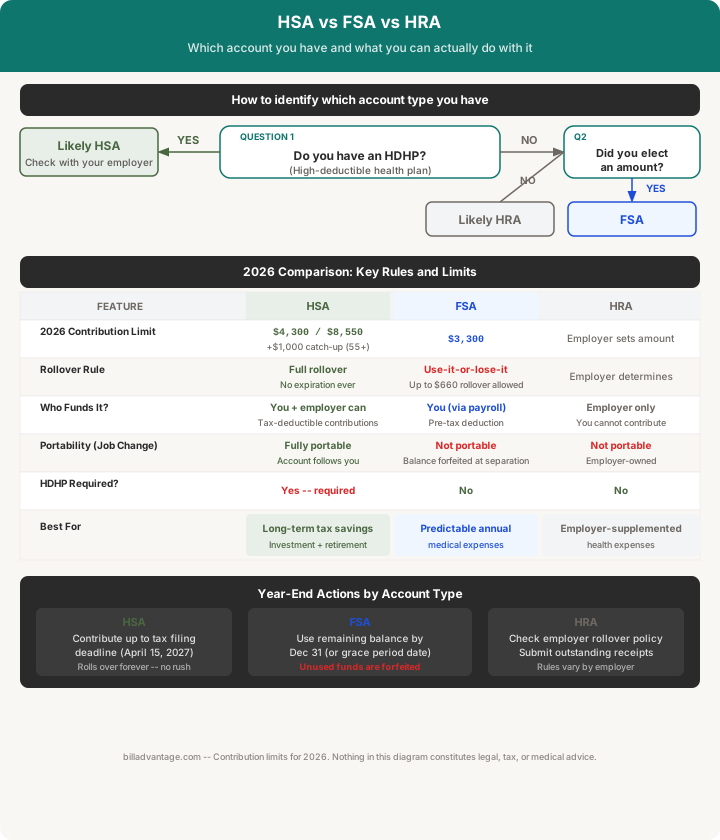
HSA: the most flexible long-term account
Contribution limits: The IRS sets separate annual limits for self-only and family HDHP coverage, and adjusts both most years, so check IRS.gov for the current figures rather than a number from a prior year. People age 55 and older can contribute an additional catch-up amount on top of the standard limit.
Core properties:
- Triple tax advantage when used for qualified medical expenses under IRS rules
- Balances roll forward every year
- You own the account after employment ends
- After age 65, non-medical withdrawals are taxed like ordinary income and are not hit with the pre-65 non-qualified penalty
Strategy note: Some people pay small qualified expenses out of pocket and invest the HSA, keeping receipts for later reimbursement. That is legal if you follow IRS substantiation rules.
FSA: use-it-or-lose-it with a payroll advantage
Healthcare FSA salary deferral cap: The IRS sets an annual cap on healthcare FSA payroll deferrals that is adjusted periodically, so verify the current figure on IRS.gov. Employers may allow a limited rollover into the next plan year or a grace period of up to 2.5 months after year-end, but not both, so check your plan's Summary Plan Description for which rule, if either, applies to you.
Core properties:
- Pre-tax payroll contributions
- The full elected amount is often available on day one of the plan year even though payroll deductions continue, which helps early-year expenses
- Unused balances are usually forfeited to the plan unless carryover or grace rules apply
- Employment termination often ends access to remaining balances unless COBRA-like FSA continuation applies for your plan
HRA: employer-funded reimbursement
The employer sets eligible expenses and whether balances roll year to year. ICHRAs can fund individual market premiums but can affect premium tax credit eligibility. Always read your SPD.
Can you have more than one?
You generally cannot stack a full medical FSA with HSA eligibility in the same year. A limited-purpose FSA (often dental and vision only) is a common pairing with an HSA.
HSA plus a classic HRA is often incompatible unless the HRA is structured as post-deductible coverage that preserves HSA eligibility. Your SPD controls the answer.
Year-end checklist
FSA holders: spend down before your plan's deadline after accounting for rollover or grace rules. Eligible supplies, dental work, glasses, and many OTC items may qualify under current IRS qualified expense rules.
HSA holders: confirm payroll deductions hit your intended annual contribution. Remember you can often make prior-year contributions until the tax filing deadline.
211 connects people to local social services including emergency financial assistance, utility help, food programs, healthcare navigation, and insurance enrollment support. Free, confidential, available 24 hours a day.
Text your ZIP code to 898211 for two-way text support. Available in all 50 states, DC, and Puerto Rico (99% population coverage). Operated by United Way Worldwide. Free and confidential.
Ready to take action?
Healthcare Financial Planning builds a month-by-month view of deductible, FSA, and HSA tradeoffs using your real plan inputs.
Track qualified spending in the HSA expense tracker inside your Bill Advantage dashboard.
Bill Advantage is a document literacy tool. Nothing in this article constitutes legal, tax, or medical advice.
Guides and tools on Bill Advantage
Explore tools, glossary entries, and denial code pages that match this topic.
More Healthcare Budgeting guides
Tracking healthcare expenses throughout the year saves money at tax time and helps you plan. Here is a simple system that works.
Read articleHow to Use an HSA for Long-Term Healthcare SavingsA Health Savings Account is one of the most tax-advantaged accounts available. Used correctly it functions as a healthcare-specific retirement account. Here is how to maximize it.
Read articleHow to Use Your FSA Before the DeadlineFSA funds expire at the end of the plan year. Here is what qualifies, how to spend the balance, and what to do if you have money left over.
Read article