What Your EOB Reveals About Your Health Plan (Beyond the Bill)
Your Explanation of Benefits is more than a claim summary. It reveals deductible progress, network discount strength, coordination of benefits issues, and HSA documentation needs, if you read the patterns.
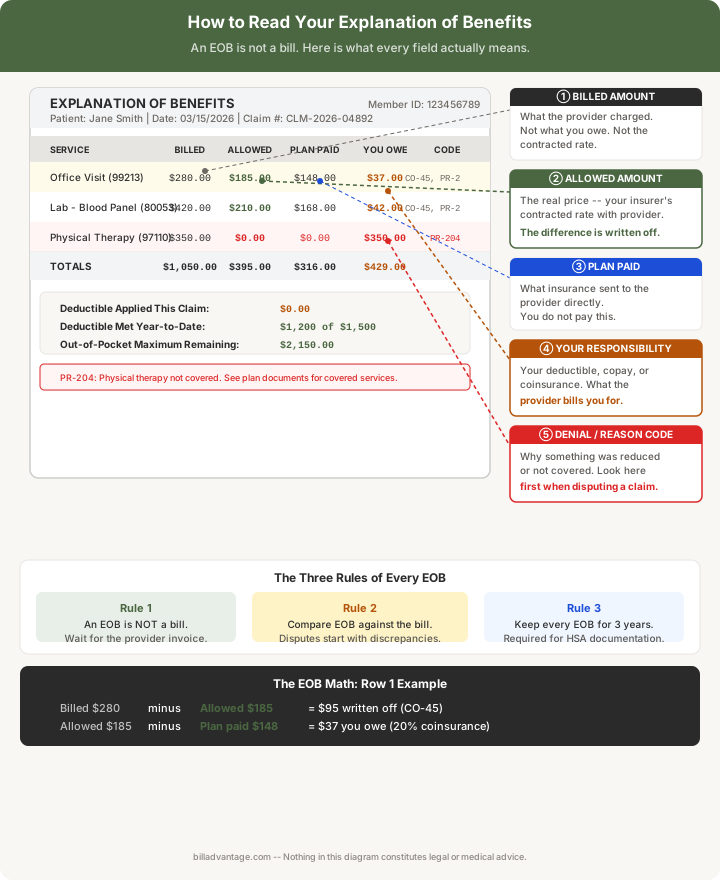
If you already know an EOB is not a bill and you understand basic columns like billed, allowed, plan paid, and member responsibility, the next step is reading patterns across EOBs as a planning tool. This article is intentionally different from a line-by-line decoder guide. It focuses on what recurring EOB patterns say about plan performance and your financial position.
Tracking your deductible and out-of-pocket maximum
Each EOB shows how much of the claim applied to deductible and how much counts toward the out-of-pocket maximum for the plan year. Across multiple EOBs you can:
- See when you have met the deductible so you do not keep paying deductible rates at the front desk by mistake
- Estimate when you will hit the out-of-pocket max and schedule planned care accordingly
- Verify the insurer is rolling totals forward correctly, because accumulator errors happen
Year-end angle: If you are close to the out-of-pocket max late in the year, completing planned care before the reset can reduce cash outlay. Always confirm your plan's reset rules.
What the allowed amount says about network strength
On in-network claims, the gap between billed and allowed is the plan's negotiated discount. A very small discount can mean weak network leverage or a provider that is not as deeply contracted as you assumed. A large discount usually reflects a strong network contract.
On out-of-network claims, allowed amounts are often plan-specific and may not match what the provider bills. That is where balance billing risk and federal surprise billing rules may matter for qualifying situations.
Coordination of benefits when two plans exist
If two health plans cover the same person (for example two employer plans for a child, or primary and secondary coverage), EOBs should eventually show coordination of benefits (COB). You should see how the secondary plan processed after the primary EOB.
If you have two plans but never see COB processing, you may be leaving secondary payments on the table. Call both insurers and confirm which plan is primary and that COB is on file.
EOBs and HSA documentation
If you have a Health Savings Account, EOBs are primary evidence for qualified distributions: date of service, provider, type of service, and your actual out-of-pocket responsibility. Keep EOBs for several years after the tax year of any HSA reimbursement you take, consistent with IRS recordkeeping expectations.
Pending claims
"Pending" or "in process" means the payer has the claim but has not finalized it. That is normal for recent dates of service. If a claim stays pending beyond roughly 30 days, call with the claim number and ask for a status code and next step.
Ready to take action?
Insurance Statement Decoder turns a single EOB into plain English.
Medical Bill Analyzer helps you compare the EOB to the provider bill when numbers do not match.
Bill Advantage is a document literacy tool. Nothing in this article constitutes legal or medical advice.
Guides and tools on Bill Advantage
Explore tools, glossary entries, and denial code pages that match this topic.
More Medical Billing guides
Deductible, copay, and coinsurance are three different cost-sharing mechanisms. Understanding how they interact tells you exactly what you will owe before you get care.
Read articleHealthcare Sharing Ministries: What They Are and What Rights You HaveHealthcare sharing ministries are not insurance and are not regulated like insurance. Here is what members actually receive and what recourse exists when a bill is not paid.
Read articleHow to Appeal a Hospital Financial Assistance DenialNonprofit hospitals are required to have financial assistance programs. If your application was denied, you have the right to appeal. Here is how to do it effectively.
Read article